Pest Control Service Charlotte homeowners rely on provides methodical interior remediation, perimeter defense, and structural sealing against persistent Carolina biological pressures. When biological intrusions compromise living areas, systematic interventions restore physical safety and indoor air hygiene.

Pest Control Service in Charlotte is an integrated management discipline combining structural exclusion, crawlspace moisture regulation, and targeted perimeter barriers to eliminate household infestations across Mecklenburg County.
Every service reflects the same meticulous attention to detail, whether it's a single job or a larger pest control service project across Charlotte.
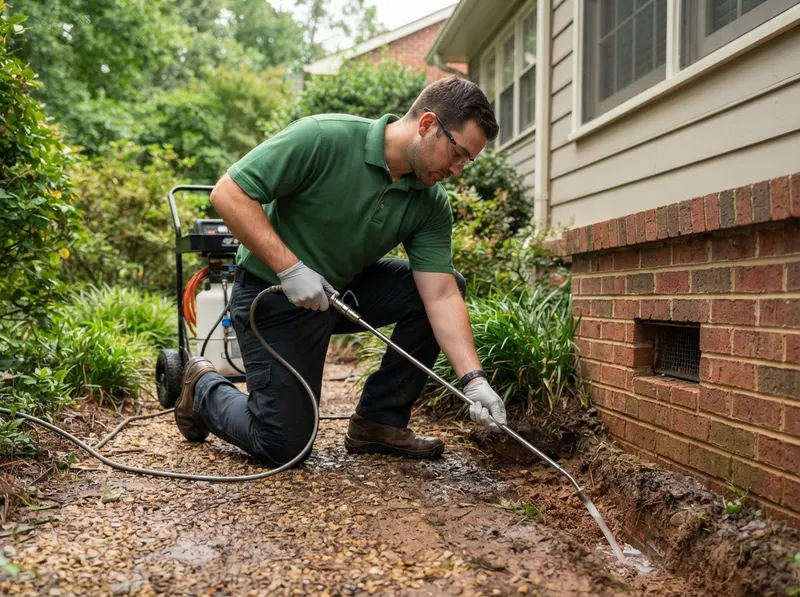
Subterranean termites (Reticulitermes flavipes) cause billions in annual structural damage by tunneling through local red clay soils into subflooring, sills, and wall framing. Remediation involves trenching the entire perimeter foundation down to the masonry footings and saturating the soil with non-repellent liquid termiticides such as fipronil at a calibrated concentration of 0.06% to 0.125%. In conjunction with trench barriers, high-impact monitoring stations containing cellulose bait matrix impregnated with noviflumuron or hexaflumuron are cored into exterior turf and concrete pads every 10 to 12 linear feet. As foraging worker termites ingest these non-repellent compounds, they unknowingly transfer the active chitin synthesis inhibitors back through mutual grooming to the reproductive queen and deep subterranean nest chambers. The complete collapse of the subterranean colony typically concludes within 60 to 90 days of continuous bait interception, safeguarding structural wood members against chronic hollow-tunnel degradation.
Get a quote →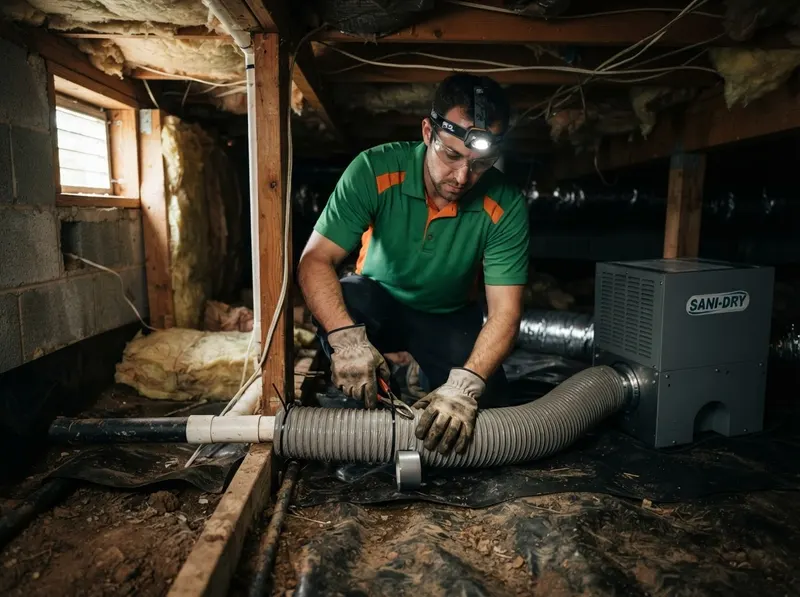
High Piedmont soil moisture and summer humidity condense on cool subfloor framing, driving rapid wood decay, surface mold amplification, and wood-destroying insect intrusions. Moisture remediation services seal open masonry foundation vents with insulated block panels, install continuous 12-to-20-mil cross-laminated polyethylene vapor retarders across all raw earth surfaces, and secure mechanical seals along piers with specialized polyurethane mastics. Dedicated commercial-grade crawlspace dehumidifiers capable of removing 70 to 110 pints of water per day are suspended from floor joists and routed into dedicated condensate pump lines to continuously regulate interior subfloor environments. By establishing ambient relative humidity levels strictly beneath 55% and reducing wood moisture content below the critical 15% fiber saturation threshold, sub-structures become uninhabitable for powderpost beetles, drywood termites, booklice, and moisture-seeking subterranean ant species.
Get a quote →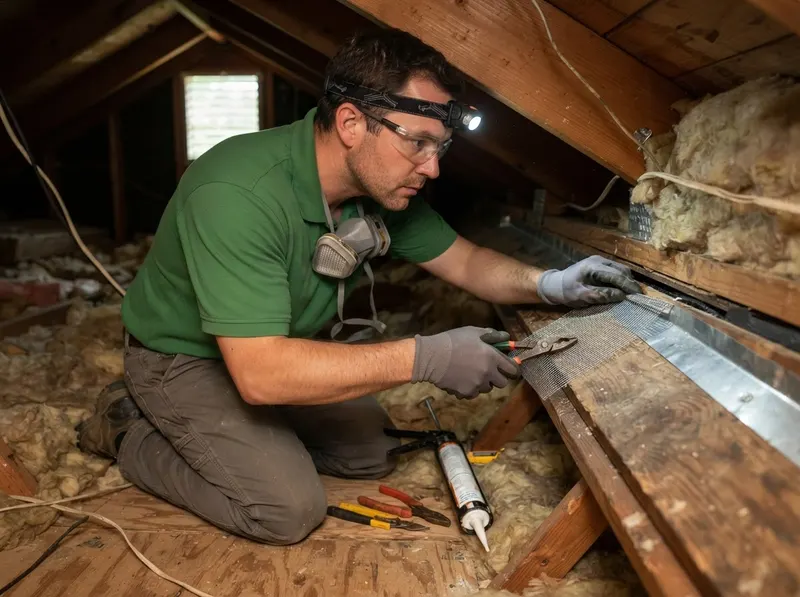
Roof rats (Rattus rattus) and Norway rats (Rattus norvegicus) exploit roof intersections, plumbing stacks, soffit vents, and masonry weep screeds to nest inside attic insulation and interior chase ways. Comprehensive exclusion protocols systematically address every structural opening larger than one-quarter of an inch using non-corrosive 20-gauge galvanized hardware cloth, copper mesh stuffing, and elastomeric structural sealants. Following physical building envelope containment, certified technicians deploy closed-box tamper-resistant snap-trap stations across primary transit paths to extract remaining interior rodents without relying on interior toxic rodenticides that risk in-wall carcass decomposition. Soiled, urine-saturated fiberglass batting is vacuum-extracted under negative pressure, followed by whole-attic misting treatments using broad-spectrum enzymatic sanitizers that neutralize hazardous rodent allergens, leptospirosis bacteria, and persistent pheromone trails.
Get a quote →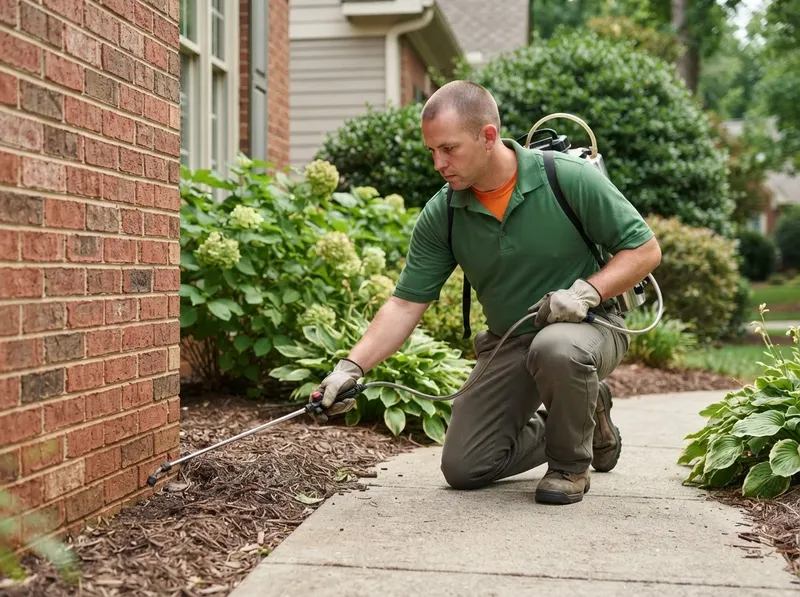
Sustained exterior defense prevents seasonal home invasions of American cockroaches, smoky brown roaches, Argentine ants, centipedes, and silverfish before they penetrate structural entryways. Technicians establish a three-foot-up and three-foot-out exterior foundation barrier using low-odor, microencapsulated synthetic pyrethroid formulations that adhere firmly to brick, stone, and treated wood without degrading under solar ultraviolet exposure. Eaves, window trim, and structural overhangs are mechanically swept using telescoping electrostatic duster poles to eliminate spider webbing and wasp nests up to twenty feet high. Technicians also broadcast specialized moisture-activated synthetic pyrethroid or hydramethylnon granules across landscape mulch rings and exterior pinestraw beds to disrupt subsurface biological harborage zones within ten to fifteen feet of the home foundation.
Get a quote →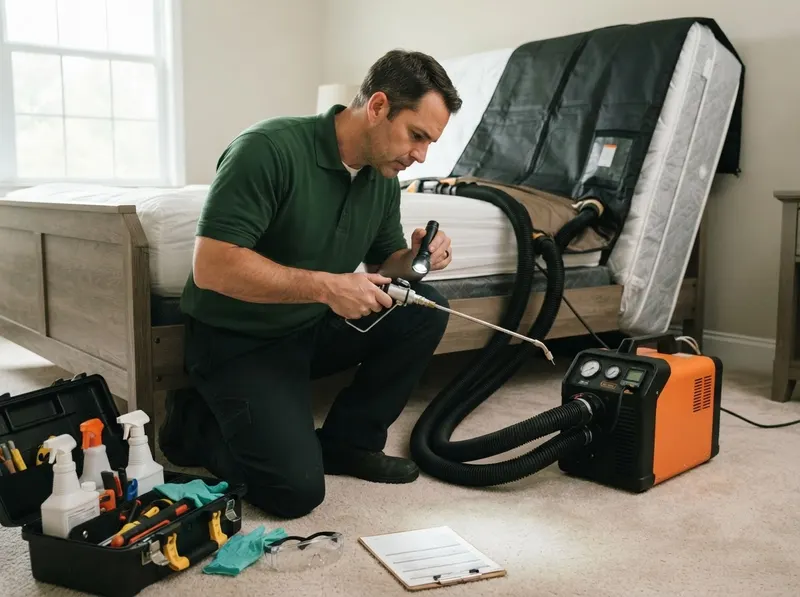
Cimex lectularius populations harbor inside mattress seams, headboard fastener joints, baseboard interfaces, and behind electrical faceplates, readily surviving standard retail insect sprays due to widespread kdr-type genetic pyrethroid resistance. Remediation combines high-output industrial electric heaters and axial air movers that gradually elevate interior living space temperatures to a uniform 122°F to 135°F lethal boundary, holding that threshold for a minimum of four continuous hours to denature cellular proteins within all life stages, including heat-resistant operational eggs. In structural arrangements where thermal remediation is restricted by heat-sensitive interior materials or multistory configurations, technicians execute precision micro-injection treatments utilizing non-pyrethroid active chemistries such as chlorfenapyr or fluralaner, paired with modern insect growth regulators that disrupt nymphal molting cycles permanently.
Get a quote →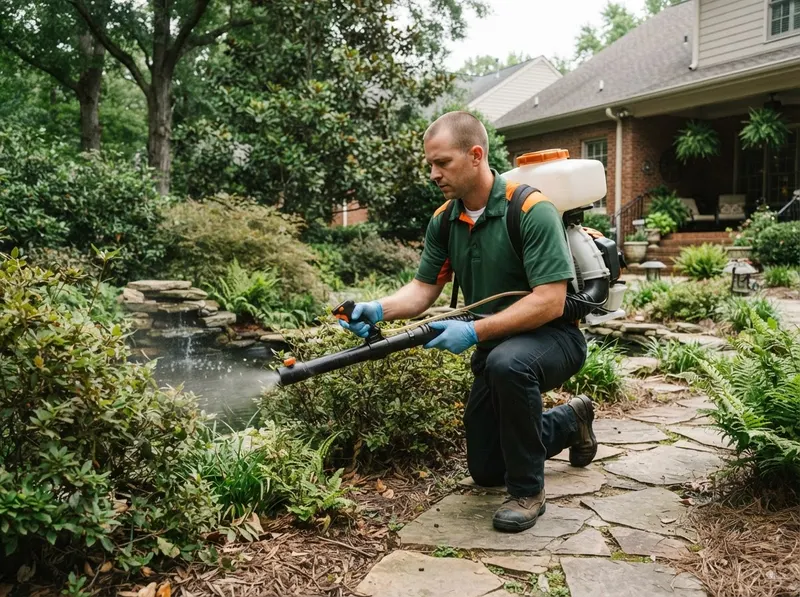
Asian tiger mosquitoes (Aedes albopictus) breed aggressively in dense ornamental foliage, clogged roof gutters, and standing landscape water pockets following typical Carolina summer rainstorms. Suppression protocols employ high-powered motorized backpack mist blowers to apply microencapsulated adulticides and botanical repellent oils to the undersides of broadleaf shrubs, groundcovers, and canopy borders where adult female mosquitoes rest during high heat. In drainage swales, decorative landscape ponds, and catch basins, technicians deposit solid biological larvicides formulated with Bacillus thuringiensis israelensis (BTI) or methoprene briquettes. These natural bacterial proteins disrupt juvenile mosquito larval digestion within 24 hours of ingestion, completely preventing emergence into biting adults while leaving aquatic organisms, domestic pets, and beneficial garden pollinators unaffected.
Get a quote →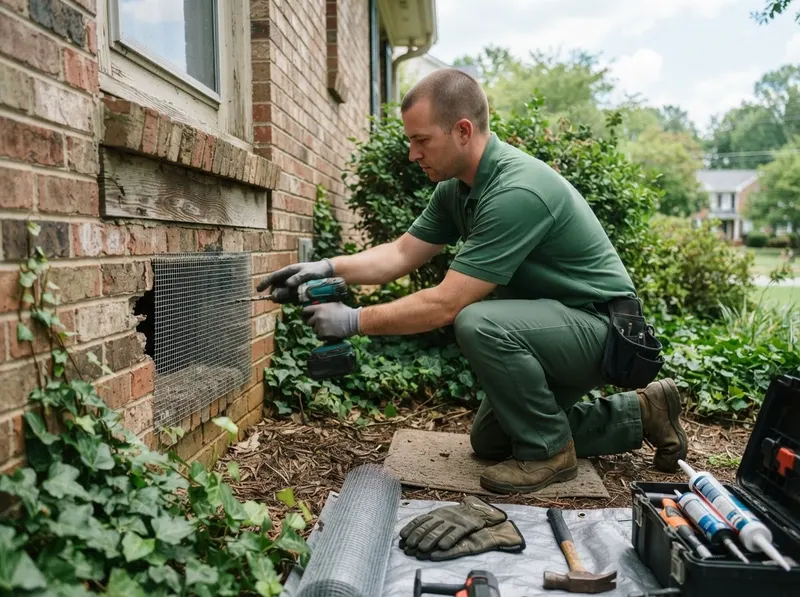
Eastern gray squirrels, raccoons, and Virginia opossums frequently chew through fascia boards, vinyl soffit transitions, and louvered gable vents to establish maternal nests within warm attic spaces. Wildlife services begin with thorough physical attic inspections to identify entry points, biological droppings, and nesting locations, followed by the deployment of humane live-capture cage traps positioned along documented travel paths. Once target wildlife is safely captured and relocated in accordance with North Carolina Wildlife Resources Commission guidelines, technicians reinforce breach zones with heavy-gauge galvanized steel sheet flashing and chimney screen covers. Remediation concludes with targeted biological odor eliminators and ectoparasite aerosol treatments to eradicate bird mites, fleas, and ticks left behind within the former harborage spaces.
Get a quote →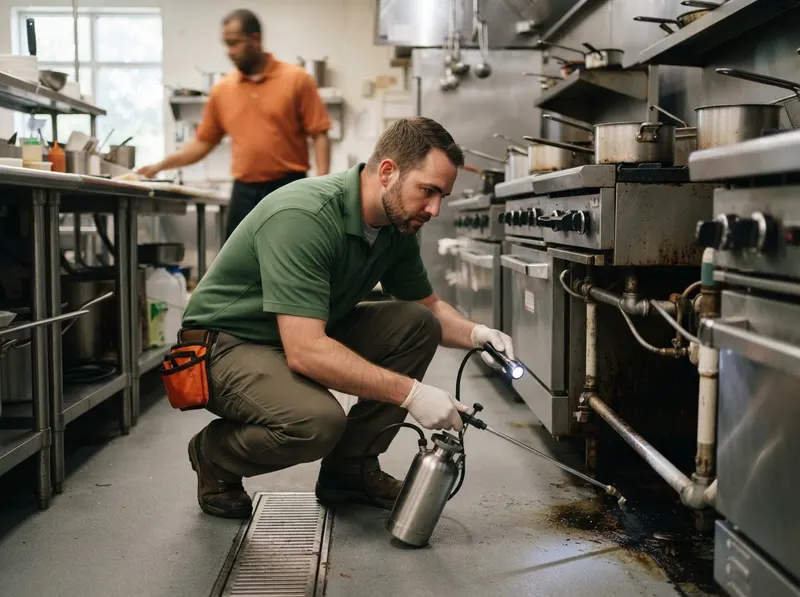
Commercial food preparation environments require rigorous pest management strategies to comply with strict Mecklenburg County Health Department sanitation codes and FDA standards. Management protocols target common kitchen invaders like German cockroaches and drain flies (Psychodidae) through targeted non-volatile bait applications along stainless steel cabinetry seams, behind motor housings, and within structural wall voids where insect pests congregate. Floor drains, grease traps, and under-counter troughs receive bioremediation foam applications infused with living non-pathogenic bacterial cultures that actively consume solidified grease, sugar residues, and organic matter that serve as prime fly breeding substrate. Discrete ultraviolet-LED insect light traps with adhesive catch panels are strategically installed away from open food zones to monitor flying insect vectors continuously.
Get a quote →You get a firm, itemized quote for your pest control service before any work begins, no surprises, no pressure.
Careful prep, tidy work, and a full cleanup when we are done. We treat your home and belongings like our own.
The same trusted, background-checked team from the first call to the final check.
Selecting the correct household pest intervention requires balancing immediate biological severity against underlying environmental triggers within the building envelope. If biological activity is isolated to visible crawling insects such as German cockroaches (Blattella germanica) or Carolina wolf spiders within kitchen cabinetry, pipe chases, or baseboards, choose an indoor-targeted residual microencapsulated application paired with exterior foundation perimeter barriers. If structural joists, crawlspace subfloors, and foundational block walls register ambient relative humidity exceeding 70% or wood moisture content above 18%, choose an integrated crawlspace moisture remediation program incorporating a 12-to-20-mil sealed vapor barrier and high-efficiency sub-structure dehumidification.
The trade-off between standard topical pest applications and comprehensive crawlspace moisture control is immediate intervention expense versus multi-year biological prevention; topical chemical sprays only interrupt living adult populations, whereas continuous structural moisture stabilization permanently deprives subterranean wood-destroying insects and moisture-loving arthropods of the sustained dampness required to establish long-term reproductive cycles. When dealing with seasonal wood-destroying organisms, if structural subterranean termites have actively constructed mud tubes along foundation stem walls, choose non-repellent liquid soil trenches combined with localized structural foam termiticides rather than perimeter bait stations alone, because liquid barriers create an immediate mortality zone that arrests structural fiber consumption within 48 to 72 hours. For nuisance mammals and roof rats traversing mature hardwood canopies in historic neighborhoods, choose whole-structure wildlife trapping combined with comprehensive architectural exclusion sealing down to one-quarter-inch margins; relying on exterior bait stations alone introduces severe carcass-odor and secondary-poisoning liabilities across interior wall voids.
In scenarios where backyard mosquito infestations disrupt outdoor recreation, choosing systematic foliage backpack misting coupled with juvenile hormone mimics and biological larvicides targeting retention swales provides six to eight weeks of continuous population disruption, whereas automated misting systems introduce higher mechanical maintenance overhead and non-target pollinator exposure risks. Homeowners can reach a local specialist by calling (704) 582-5455 to review structural options.
Every project gets a firm, written price after a free on-site visit. Ranges below for orientation.
Tell us about your pest control service job and we'll send a clear, written quote, usually the same day. Or just call and talk to a real Charlotte pro.
(704) 582-5455
The extensive, mature willow oak tree canopies shading historic neighborhoods like Myers Park, Dilworth, and Elizabeth create direct biological bridges for roof rats, carpenter ants, and southern pine beetles to transfer directly from high branches onto residential slate and asphalt shingle roofs. Concurrently, dense Cecil clay soil profiles throughout Mecklenburg County retain heavy storm runoff along the Little Sugar Creek Greenway and surrounding flood basins, elevating crawlspace moisture levels to dangerous thresholds above 20% wood moisture content without active encapsulation. Properties situated near major open-air recreation points like Freedom Park, UNC Charlotte Botanical Gardens, and the U.S. National Whitewater Center regularly face intense seasonal migrations of subterranean termites swarming each spring as soil temperatures cross the critical 60°F threshold. In newer suburban developments throughout Ballantyne and University City, heavy site grading displaces native soil layers, disrupting subterranean ant colonies and field mice populations that subsequently seek shelter within modern slab-on-grade plumbing entries and exterior weep holes. Urban infill corridors across South End and NoDa experience heightened rodent and insect transit along light rail routes and historic brick building foundations, necessitating meticulous structural exclusion strategies that respect older architectural masonry while eliminating minute mechanical ingress voids.
Free estimates for Charlotte & the surrounding area.
 SafeHaven Pest Control