Thermal remediation operates by elevating interior room ambient temperatures to a sustained lethal range between 120°F and 135°F using specialized high-output electric or indirect-fired heaters. This heat penetrates…
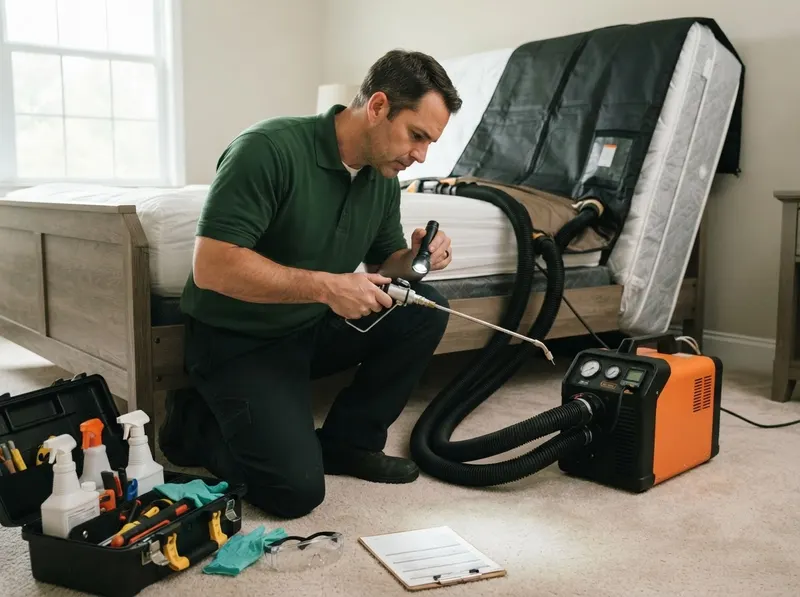
Thermal remediation operates by elevating interior room ambient temperatures to a sustained lethal range between 120°F and 135°F using specialized high-output electric or indirect-fired heaters. This heat penetrates deep into mattress seams, box springs, behind baseboards, and inside electrical outlet boxes where Cimex lectularius hide from surface sprays. While heat denatures insect proteins and dehydrates viable eggs instantly upon sustained contact, ambient thermal convection can occasionally leave tiny cold spots inside exterior wall insulation or subfloor voids. To eliminate the risk of surviving stragglers, technicians introduce a secondary barrier: targeted micro-injections of non-repellent residual compounds or amorphous silica dust directly into structural crevices, creating an invisible perimeter that neutralizes insects as they attempt to migrate.
Selecting this dual-modality approach addresses the severe limitations of standard single-method exterminations. Relying purely on traditional liquid contact sprays frequently fails because bed bugs across Mecklenburg County have documented physiological resistance to common pyrethroid chemistries, and surface sprays cannot penetrate egg chorions. Conversely, deploying thermal treatments without chemical micro-injections leaves the home vulnerable to reintroduction if visitors bring hitchhikers into the residence weeks later. The dual system provides both immediate mortality and an active residual safety buffer, preserving indoor living spaces for children and pets without saturating fabrics with persistent chemical odors.
Local housing structures across Charlotte dictate specific thermal preparation steps. Historic bungalows and multi-story residences in Dilworth, Plaza Midwood, and Elizabeth often feature tongue-and-groove hardwood floors, thick plaster walls, and original baseboards that require steady, slower heat increments to prevent structural warping while driving temperatures into deep settling cracks. In dense apartment and condominium settings like South End, NoDa (North Davidson), and University City, technicians isolate shared party walls using high-velocity air movers to stop bed bugs from flushing into neighboring units. In expansive modern estates in Myers Park, Cotswold, and Ballantyne, zoned heating equipment regulates temperatures across large open-plan bedrooms, ensuring closet recesses, crown molding, and adjoining crawl space access points reach thermal equilibrium without damaging electronics or interior finishes.
Every job gets a firm, written price after a free on-site visit.
Tell us about your bed bug heat and chemical micro-injection protocol job in Charlotte and we'll send a clear, written quote, usually the same day.
 SafeHaven Pest Control